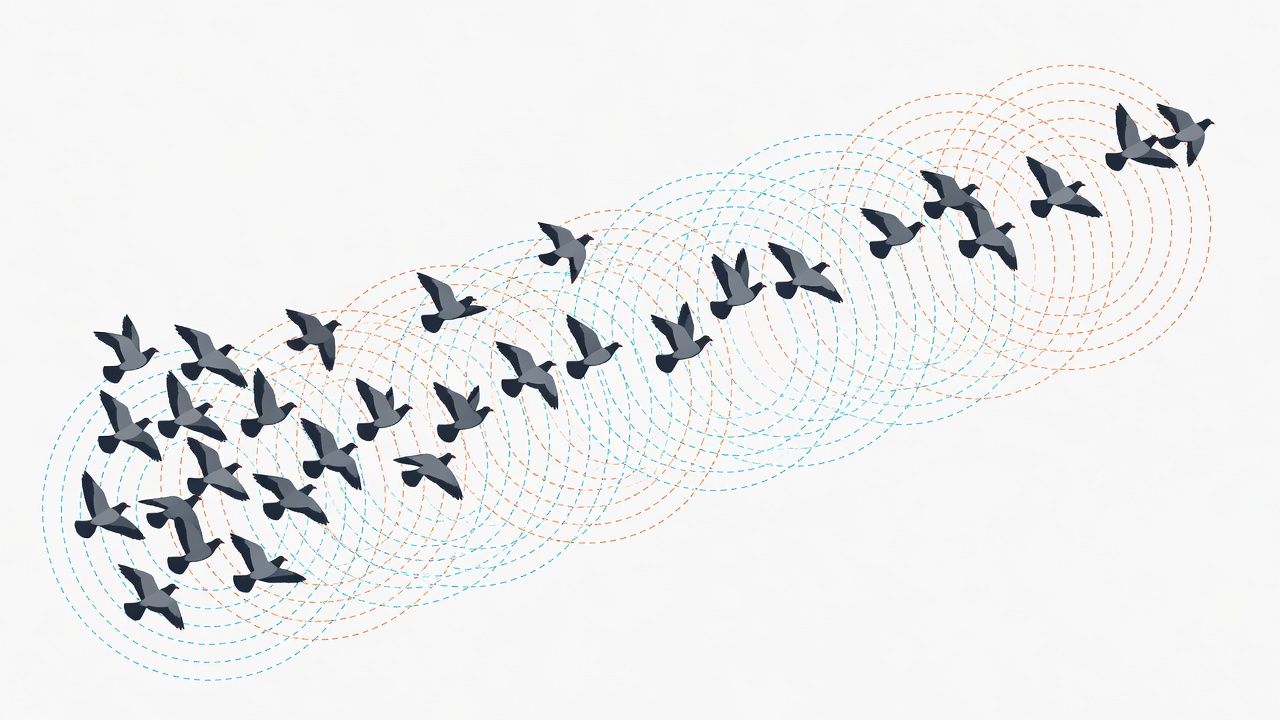
Distributed Decision Making in Flight
Using miniature synchronized GPS loggers recording positions at 5 Hz, researchers in Budapest and Oxford discovered that pigeon flocks exhibit flexible, tiered hierarchies. Rather than obeying a single static leader, flight directional shifts emerge from consensus among a small core of experienced navigators, with lower-ranking birds adjusting their bearings based on immediate neighbors.
The Wing-Clap Alarm Whistle
When an urban pigeon takes off in sudden alarm, its primary flight feathers produce an unmistakable loud whistling clap. This is not incidental noise: the eighth primary feather has evolved a distinct narrow shape that resonates mechanically during rapid take-offs, alerting the entire flock before any vocal cry could be uttered.
Aero-Acoustics • Non-Vocal Alarm Signaling
Aerodynamic V-Drafting vs Cluster Formations
Unlike geese that fly in strict V-formations, urban pigeons travel in dense 3D teardrop clusters. Within these clusters, birds maintain precise safety buffers of 1.2 to 2.5 wing lengths, balancing the energetic benefits of upwash vortices with collision avoidance.
Fluid Mechanics • Flight Envelope Safety
Pavement Feeding Peck-Orders
On the ground, social structure shifts. Established breeding adults dominate central feeding positions where breadcrumbs or dropped grain fall, while younger juveniles feed on outer margins, trading food access for an easier escape route if approached by dogs or pedestrians.
Ground Ethology • Age & Social Status
Courtship & Tail-Fanning Rituals
Observe the male bowing display: head inflated, cooing cadence, and a 180-degree tail-feather sweep across the pavement. Females evaluate male stamina and plumage symmetry while continuing to peck. Pigeons form monogamous pairs that often last multiple seasons.
Mating Systems • Monogamy and Pair Bonds